
By Derick Ngaira, African Institute for Development Policy
Universal Health Coverage (UHC) is about more than whether a service is included in a national policy or an insurance benefits package. For people living with or at risk of diabetes, hypertension, cancer or other noncommunicable diseases (NCDs), UHC means being able to access the care they need without being pushed into financial hardship.
That makes NCDs a critical test of whether health systems are delivering on the promise of UHC. Integrating NCD services into UHC requires not only adding NCDs to a policy document or a benefits package, but it also requires financing arrangements, data systems, and service delivery models that can sustain care over the long term.
These challenges were at the center of a two-day Financing Accelerator Network for NCDs (FAN) Learning Workshop in Accra, Ghana, on 19-20 August, 2026. Over 25 representatives from Ministries of Health and Finance, civil society, and academia from Cameroon, Ghana, Kenya, Rwanda, Somalia, and Uganda - came together to examine how countries are making progress, meeting challenges, and importantly, where gaps remain between policy commitments, financing, and access to care.
The countries represented were at different stages of reform and working within different health-system and fiscal contexts. Yet the discussions pointed to a common goal: strengthening financing and systems that deliver on the NCD and UHC agendas.
Ghana: Turning reform into measurable impact
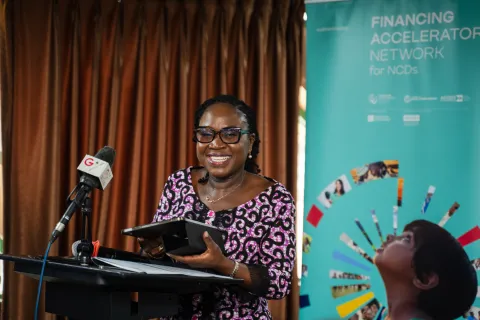
Opening the workshop, Dr Belinda Nimako, Director of Policy, Planning, Monitoring and Evaluation at Ghana’s Ministry of Health, explained how Ghana is approaching financing NCDs through interventions aimed at both early care and more advanced treatment.
“Together, Free PHC and MahamaCares close the coverage gap from both ends: catching NCDs early at the primary care level, and protecting families from catastrophic costs when specialist care is needed.”
Ghana’s Free Primary Health Care policy is intended to remove financial barriers at PHC level, supporting screening, early diagnosis and routine management of conditions such as hypertension and diabetes. But its introduction raises questions that will be important and relevant to countries pursuing UHC reform and the integration of NCDs. Who and how many people will benefit? Are those most in need being reached? Can the financing model be sustained? Is it reducing the financial burden of NCD care?
Answering those questions will require data that shows whether financing is translating into equitable access, improved health outcomes, and greater financial protection.
The discussion also highlighted the importance of bringing different parts of government into the conversation. Ministries of Health understand the burden of disease and the realities facing health facilities, while Ministries of Finance play a critical role in determining how much is allocated to the health sector.
Ghana’s experience as a member of FAN has already helped strengthen the dialogue between the country’s ministries and evidence-informed advocacy. Labram Musa, Executive Director of Vision for Accelerated Sustainable Development, Ghana, noted that
“involvement in FAN’s work on investment cases helped deepen our understanding of how governments can use evidence to justify funding for specific health interventions.”
That knowledge was subsequently applied through their contribution to an investment case on air pollution in Ghana.
As countries seek to expand NCD services through UHC, evidence is essential to demonstrate the scale of the need to Ministries of Finance, and to understand whether new investments are reaching people and delivering the intended results.
Uganda: Integration cannot stop at service delivery
Uganda’s experience highlighted another opportunity: financial integration. Integrating NCDs services into existing delivery and data systems can help expand access, but service integration needs to be accompanied by financing that can support expanded services over time.
Dr. Frank Mugabe, Principal Medical Officer in the NCD Department at Uganda’s Ministry of Health, emphasized the “need to ensure that financing mechanisms keep pace with efforts to integrate services.”
This is particularly important as countries reform their health financing system: what is integrated into the health system also needs to be reflected in how that system is financed.
Kenya: Leveraging UHC to expand access to NCD care
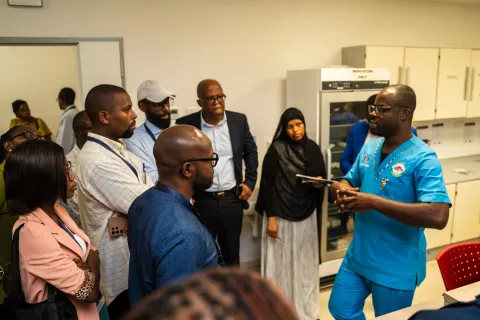
The value of cross-country, in-person learning was particularly evident during a visit to Korle Bu Teaching Hospital, where participants saw how Ghana is advancing NCD prevention and care while integrating services into UHC.
The visit brought a practical dimension to the discussions, with participants seeing firsthand how policy and financing decisions translate into service delivery on the ground and prompting questions about what other countries can do to further strengthen their own health systems.
Kenya already has experience financing renal care, including dialysis. Seeing Ghana’s example prompted Joseph Otieno, Principal Benefits Management and Actuarial services at Kenya’s Social Health Authority, to reflect on the “opportunities to think more broadly about how specialized services such as transplantation can be integrated into health financing and UHC arrangements.”
For countries still strengthening the foundations of NCD care, there is a challenge that is even more fundamental: how do national commitments become services that people can actually access?
The visit to Korle Bu offered a practical reference point for how national policies can be translated into services at facility level. Khalid Mohamed Mohamud, a health systems specialist from Somalia’s Ministry of Health described it as an opportunity to see how Ghana was translating polices into implementation on the ground: “We have learned how best Ghana government is translating their paper-based policies into actual implementation at field level.”
The exchange illustrates that it is not about replicating health systems. Rather, it was about seeing what implementation can look like in practice and considering what elements could be adapted to a country’s own context.
Different context, shared challenges
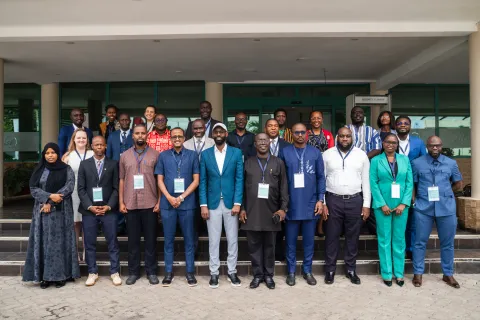
The experiences discussed in Accra showed that countries may be at different points in their journey, but they all point to several common lessons:
- NCD integration needs to happen across the health system: across service delivery, data systems, and financing.
- Financing decisions need to be informed by evidence.
- Ministries of Health and Finance need to be part of the same conversation.
- Countries can accelerate progress by learning from one another.
Cross-country learning can help policymakers see what is possible, understand where approaches may be falling short, and adapt solutions that have been implemented and tested elsewhere.
As Ferdinant Sonyuy, President and CEO of Cameroon’s Reconciliation and Development Association, reflected, the FAN creates
“a wonderful opportunity to have ministries of public health, ministries of finance, civil society, and leaders that are focused on noncommunicable diseases coming together for the purposes of discussing, sharing, and learning from each other.”
For FAN, that is the value of bringing Ministries of Health and Financing, civil society and technical experts into the same conversation: to exchange experiences and turn that experience into practical choices about how NCDs can be sustainably financed and integrated into UHC.
Ultimately, the measure of progress is whether people can access the care they need - from prevention and early diagnosis through treatment and long-term management - when and where they need it, without enduring financial hardship.
Turning global commitments on NCDs and UHC into meaningful progress will depend on building health systems and financing arrangements that can deliver that care.