
Country Experiences and Emerging Opportunities
By Derick Ngaira, Maria Jose Pastor, and Leah Ewald
“Everyone has something to learn, and everyone has something to share.”
Domestic Resource Mobilization in Action
A central takeaway was clear: more public resources must flow into health, and specifically into NCDs, in ways that are practical, context-specific, complementary, and structured to avoid fragmentation.
FAN country members are already implementing creative solutions to expand resources for health and NCDs, including:
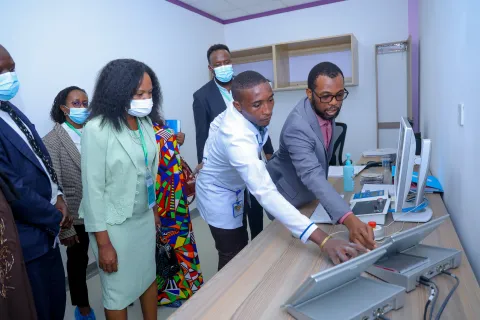
- Kenya: A visit to Kenyatta National Referral and Teaching Hospital showcased how a syndicated loan from the China Exim Bank is helping expand hospital capacity. Kenya also shared two innovative financing mechanisms, the Tobacco Control Fund and the Emergency and Critical Illness Fund.
- Ghana: Establishing the Ghana Medical Trust Fund, partly funded by the uncapping of the National Health Insurance Levy.
- Somalia: Communities contribute 2.5% of household income to social funds that support both health and education.
- Uganda: Patient support groups pool savings for health expenses and are piloting district-level insurance schemes funded through $1 contributions per person.
- Rwanda: Thirty-five percent of the community-based health insurance (CBHI) revenue base comes from traffic fines, accident penalties, insurance contributions, and telecom levies, enabling expanded benefit packages.
- Malawi: Exploring the creation of a national health fund, with a focus on how best to include contributions from the informal sector.

Harnessing Innovation and Persistence: Lessons from the Private Sector
The workshop also created space to explore how the private sector and governments can work together to strengthen health financing for NCDs. PharmAccess, an organization that leverages technology to improve health systems in Africa and a member of the FAN Technical Advisory Group, shared how digital tools, such as medical savings accounts, virtual care platforms, and patient-facing transparency apps are helping build trust and improve access.
As one participant asked, “Why should I contribute if I’m not receiving quality services?”
These innovations are offering practical answers by making spending more transparent, blending virtual and in-person care, and rewarding providers for quality.
Rwanda’s Social Security Board added another example, describing how five years of steady collaboration with the Ministry of Finance eventually secured earmarked resources for health. Together, these stories highlighted that sustainable solutions often emerge at the intersection of innovation and persistence, and that progress depends on partnerships that cut across sectors.
Shared Lessons and Challenges Across the Region
Despite diverse contexts, delegates noted common challenges: high medicine and technology costs, weak data systems, low budget prioritization, and gaps in allocation. At the same time, they also highlighted promising practices.
For instance, Kenya is exploring health taxes on sugary drinks. Ghana is leveraging its National Health Insurance Scheme. Uganda is bringing investment cases before parliament while testing community financing models. Somalia is piloting/testing a community contribution insurance scheme, drawing on cultural and religious practices, including 2.5% household contributions. Malawi is considering earmarked taxes, Rwanda has introduced a real-time resource tracking system, while Cameroon is working to strengthen its budget advocacy.
As Labram Musa, Executive Director of Vision for Accelerated Sustainable Development, emphasized: “Governments should increase allocations to NCDs, not just in policy but in practice. In Ghana, we are advocating for at least 50% of revenue raised in tobacco, alcohol and sugar-sweetened beverages and processed food taxes to be ring-fenced for NCD prevention and treatment.”

Three major themes emerged from these discussions: health taxes, community engagement, and data-driven advocacy represent some of the most promising strategies for sustainable financing for NCDs. Participants also agreed on the urgent need to develop investment case tools and comparative studies to build stronger evidence and accelerate reforms.
Moving Forward
Each country left the workshop with clear next steps. Somalia committed to strengthening data systems and advocacy; Kenya prioritized budget advocacy and amendments to tobacco regulation; Ghana set its sights on developing an NCD investment case and earmarking health tax; Uganda focused on patient support groups and national insurance; and Rwanda emphasized strategic purchasing and real-time tracking.
FAN members also identified two joint learning priorities: developing NCD investment case tools and conducting comparative analyses of NCD financing tailored for policy makers across Africa. Both will provide the evidence needed to accelerate progress.

To support country efforts, FAN members have the opportunity to apply for catalytic grants through the FAN Fund. These resources aim to seed innovative approaches, support promising programs, and scale initiatives that advance financing for NCDs.
FAN will continue to accompany member countries as they work to develop and implement their country action plans, with additional in-person and virtual learning planned for 2026 to sustain momentum and deepen cross-country exchange.
Conclusion
The workshop highlighted both the urgency and opportunity for health financing for NCDs in Sub-Saharan Africa. While households and donors currently bear the brunt, countries now have a menu of solutions to draw from: Ranging from health taxes to community-based financing and private sector partnerships. By committing to joint learning and investing in robust evidence, African nations can begin to close the financing gap and ensure NCD care is accessible, equitable, and sustainable.
For more, read the full workshop report.